
Leaf Management
Sweet Water continues to share the project's findings with communities across the region, helping local governments learn more about proven practices that protect rivers, lakes, and streams through education, collaboration, and nature-based solutions.
Expanding the Impact
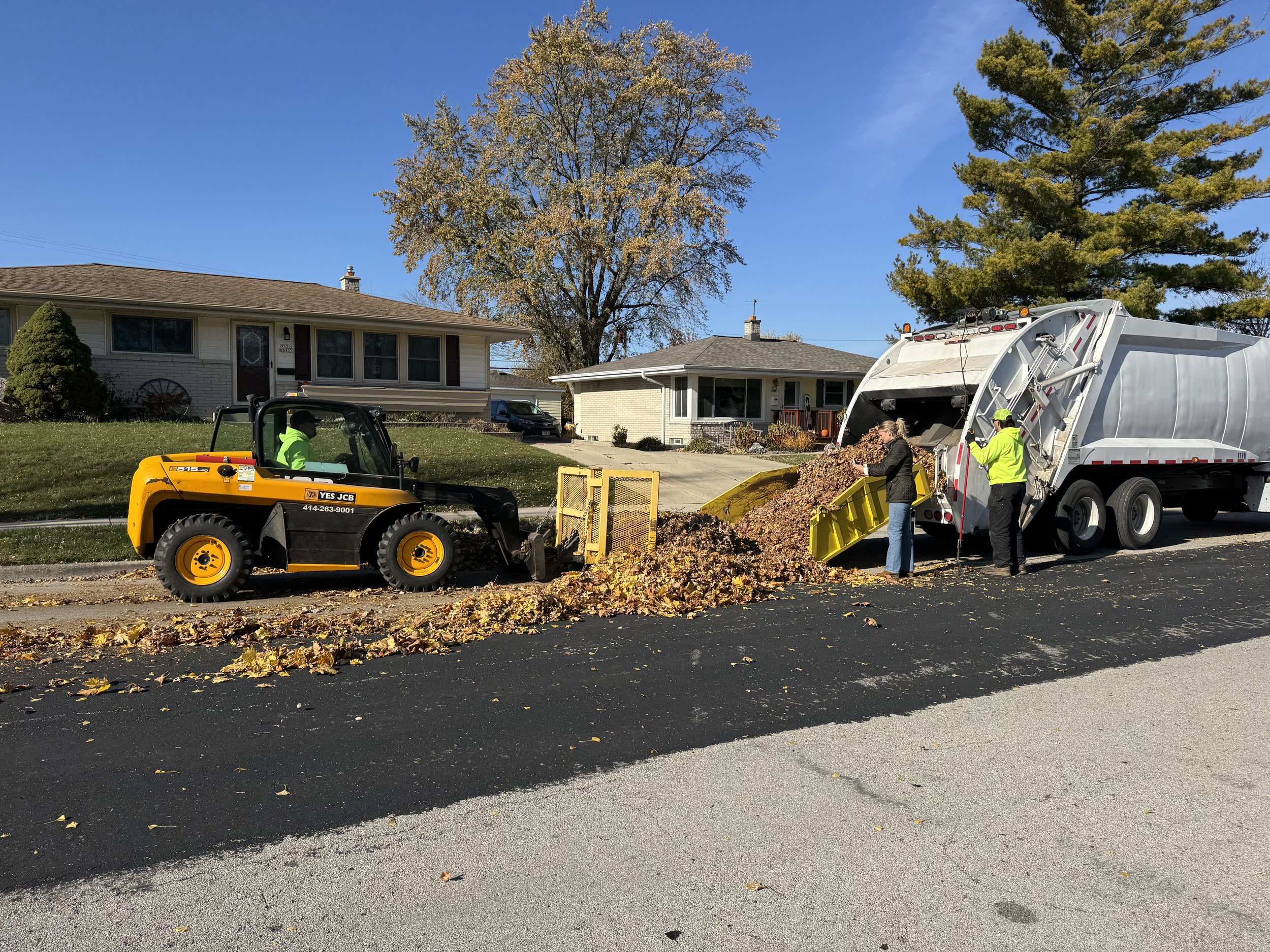
Decomposing leaves can contribute 50% or more of residential phosphorus loads, fueling harmful algal blooms and degrading local waterways. — USGS (2019)
Reducing phosphorus pollution through practical, community-based solutions.
In 2025, Sweet Water completed a two-year Leaf Management pilot project in partnership with the Village of Menomonee Falls, the United States Geological Survey (USGS), the University of Wisconsin–Milwaukee (UWM), Fund for Lake Michigan, and the McDougal Family Foundation. The project combined community education, behavior-change research, and phosphorus analysis to evaluate the effectiveness of residential leaf management practices.
The results demonstrated that community action can produce measurable environmental benefits. Neighborhoods participating in the leaf-mulching campaign reduced street leaf accumulation by 30%, leading to an estimated 26% reduction in phosphorus loading. These findings provide municipalities with a practical, cost-effective strategy for improving water quality while advancing watershed restoration goals.